
Few actives have drawn as much attention in recent months as PDRN. Searches for it have multiplied within a year, and on social media it is often simply called the "salmon DNA treatment". For brands and formulators this raises a practical question: how can PDRN be used in serums and creams without relying on animal-derived raw materials?
What is PDRN?
PDRN stands for polydeoxyribonucleotide. It is a mixture of DNA fragments obtained from natural sources and highly purified. In cosmetics PDRN carries the INCI name Sodium DNA.
The active has its roots in medicine, where it has been studied for years in wound healing and tissue regeneration. From there it made its way into aesthetic dermatology and finally into everyday skin care.
How does PDRN work on the skin?
Research mainly describes two routes by which PDRN supports skin regeneration:
- Building blocks for the cell: the DNA fragments supply nucleotides and nucleosides that cells can recycle through the so-called salvage pathway. This leaves more energy for other tasks during cell renewal.
- Signalling: PDRN binds to the adenosine A2A receptor, which triggers processes associated with regeneration, soothing and collagen formation.
For skin care products this means PDRN fits concepts around anti-ageing, repair and stressed skin. As always, the claims a finished product may carry depend on its own efficacy testing.
Salmon or algae: where does PDRN come from?
Conventional PDRN is obtained from the sperm of salmon or trout. The source is well studied, but it has drawbacks for many brands:
- Products containing raw materials of animal origin cannot be marketed as vegan.
- Natural cosmetics standards and many target groups favour plant-based raw materials.
- A fish-based origin raises questions about sustainability and traceability.
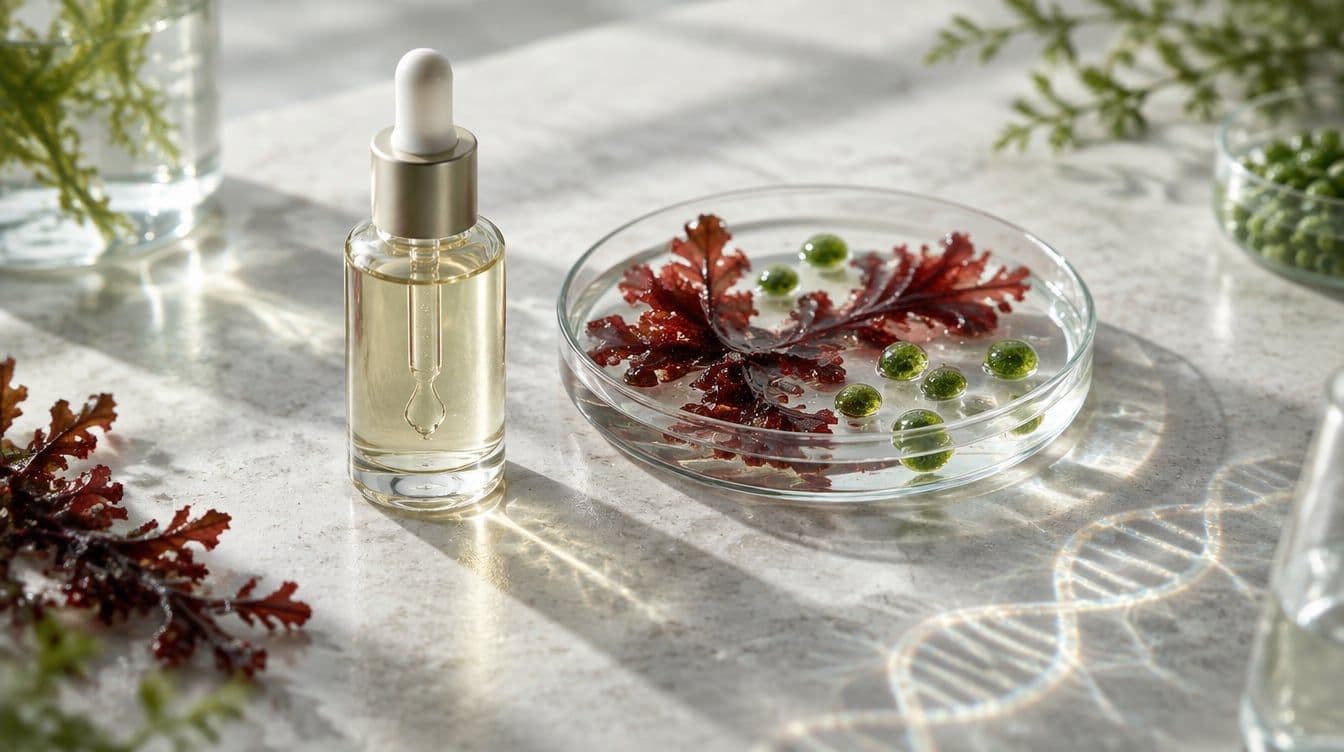
Algae offer a convincing alternative. They also contain DNA that can be processed into PDRN. Cultivated under controlled conditions, they provide a consistent and purely plant-based raw material.
Two algae sources in the SLI Chemicals portfolio
Together with our partner Giga Fine Chemicals from Taiwan we offer two algae-based PDRN actives:
ZIGA® Bio BL-PDRN is derived from the red alga Botryocladia leptopoda, also known as red grape algae. It is cultivated with deep ocean water from the Kuroshio Current off Taiwan. Its focus is collagen formation and skin vitality.
ZIGA® Bio CGF-PDRN is obtained from the freshwater microalga Chlorella vulgaris. Its focus is cell migration, collagen formation and support of telomerase activity.
In the manufacturer's cell studies both variants promoted cell migration and collagen synthesis. They also increased the activity of telomerase, which plays an important role in cell ageing at the ends of the chromosomes.
Product data at a glance
- INCI: Aqua, Pentylene Glycol, 1,2-Hexanediol, Sodium DNA
- Recommended use level: 0.5 to 3.0 %
- COSMOS approved, Halal certified, listed in China (IECIC)
- Purely plant-based and free from raw materials of animal origin
PDRN in serums and creams instead of injections
In clinics PDRN is mostly injected. Such treatments are reserved for physicians and are not cosmetics. Skin care products, on the other hand, work on the skin and combine PDRN with other care ingredients in a product for daily use.
This at-home use is exactly what consumers are increasingly asking for. Algae PDRN is suitable for:
- Serums and ampoules
- Creams and lotions
- Gels
- Toners
Formulation notes
Details on temperature, pH range and compatibility are given in the technical data sheet, which we are happy to send you.
Our guide formulation PDRN Serum (SLI-072) from the SLI LAB shows how this works in practice. It is available in our download area. All actives with INCI and use level are listed in the skin care actives category.
Conclusion
PDRN is more than a passing trend from the clinic. With algae as the source, the active can be brought into skin care products in a vegan, certified and traceable way. For samples, technical data sheets or support with your formulation, our team will be glad to help.
Frequently asked questions
What is PDRN?
PDRN (polydeoxyribonucleotide) is a mixture of purified DNA fragments. In cosmetics it carries the INCI name Sodium DNA and is used mainly in anti-ageing and repair products.
How does PDRN work on the skin?
PDRN supplies building blocks for cell renewal and binds to the adenosine A2A receptor. Both are associated with regeneration, soothing and collagen formation.
Is PDRN vegan?
Conventional PDRN comes from salmon or trout and is therefore not vegan. PDRN from algae, such as ZIGA® Bio BL-PDRN and ZIGA® Bio CGF-PDRN, is purely plant-based.
What is the difference between salmon PDRN and algae PDRN?
Both consist of DNA fragments. The difference lies in the source: algae PDRN contains no animal raw materials and is therefore suitable for vegan products and standards such as COSMOS.
What concentration of PDRN is used?
For ZIGA® Bio BL-PDRN and ZIGA® Bio CGF-PDRN the manufacturer recommends a use level of 0.5 to 3.0 %.
How do I get samples?
Contact us through the contact form. We will send you samples, technical data sheets and, on request, the PDRN Serum guide formulation.